
Lower Spine Pain

Conquer the Ache: Proven Tips to Prevent Lower Spine Pain for Desk Workers
The alarm clock rings, and you mentally prepare for the day. But before you even make it to your first cup of coffee, you feel it: that familiar, dull throb in your lower back. For millions of professionals, this isn't just an occasional annoyance—it is the background noise of their daily lives.
We were not evolved to sit in ninety-degree angles for eight, ten, or twelve hours a day. Our ancestors were movers, hunters, and gatherers. Yet, the demands of the modern workplace often tether us to chairs, staring at glowing rectangles while our bodies quietly suffer the consequences. Lower spine pain (LSP) has become one of the most common occupational hazards for desk workers, leading to decreased productivity, mood shifts, and a significant drop in overall quality of life.
The good news is that this pain is not an inevitable sentence. By understanding the mechanics of your spine and implementing specific, actionable strategies, you can reclaim your comfort and protect your back for the long haul. This guide explores why your desk job might be hurting you and, more importantly, how to stop it.
Understanding the Causes of Lower Spine Pain
To fix the problem, we first have to understand the mechanism of the injury. Lower spine pain in desk workers rarely stems from a single traumatic event. You didn't fall off a ladder; you sat in a chair. This is a cumulative injury, the result of thousands of micro-stresses placed on the body over months and years.
Poor Posture and Ergonomics
The human head weighs approximately 10 to 12 pounds. When your ears are aligned over your shoulders, your spine supports this weight effortlessly. However, when we focus intently on a computer screen, a phenomenon often called "tech neck" or forward head posture occurs. We lean in.
For every inch your head moves forward, the leverage creates significantly more pressure on the spine. But the issue travels downward. When the upper body slumps forward, the natural S-curve of the spine—which acts as a shock absorber—flattens into a C-shape. This forces the lumbar spine (lower back) to bear loads it wasn't designed for, straining the ligaments and muscles that hold your vertebrae together.
Furthermore, poor ergonomics exacerbates this. If your monitor is too low, you slouch to see it. If your mouse is too far away, you rotate your shoulder and twist your spine. These subtle misalignments create asymmetrical tension, causing one side of your lower back to work harder than the other.

Prolonged Sitting and Lack of Movement
The act of sitting itself is physically demanding on the skeletal system. When you stand, the pressure on your spinal discs is relatively low. When you sit, that pressure increases significantly.
Spinal discs have poor blood supply. They rely on movement—specifically the compression and release of walking or moving—to pump nutrients in and waste products out. When you sit for four hours straight without moving, you are essentially starving your spinal discs of nutrition. Over time, this leads to degeneration, stiffness, and the inflammation that registers as pain.
Additionally, prolonged sitting causes adaptive shortening of muscles. Your hip flexors (the muscles at the front of your hips) are in a shortened position while seated. Over time, they tighten. When you finally stand up, these tight hip flexors pull on the pelvis, tilting it forward and compressing the lower back.
Weak Core Muscles
There is a common misconception that the "core" refers only to the abdominal muscles that make up a "six-pack." In reality, your core is a complex cylinder of muscles that includes the abdominals, obliques, glutes, and the deep muscles of the back (multifidus and erector spinae).
This muscular cylinder acts as a natural corset, creating intra-abdominal pressure that supports the spine. When these muscles are strong and engaged, they take the load off the vertebrae. However, sitting renders these muscles inactive. Glutes turn off (gluteal amnesia), and abs go soft. Without this muscular support system, the burden of holding your torso upright falls entirely on the passive structures of the spine—the discs and ligaments—which eventually become irritated and painful.
Prevention Tips for Desk Workers
Understanding the problem is half the battle; the other half is taking action. Prevention doesn't require you to quit your job or become a marathon runner. It requires smart, consistent adjustments to your environment and your habits.
Ergonomic Workstation Setup
Your workspace should fit you; you shouldn't have to contort your body to fit your workspace. Building an ergonomic environment is the first line of defense.
- Chair Configuration: Your feet should be flat on the floor, with your knees bent at a 90-degree angle. If your feet dangle, use a footrest. The back of the chair should support the natural curve of your lumbar spine. If your chair lacks lumbar support, a small pillow or rolled-up towel placed at the small of your back can make a world of difference.
- Monitor Height: This is the most common error. The top third of your monitor screen should be at eye level. This encourages you to look straight ahead rather than tilting your chin down, which preserves the cervical curve and prevents the chain reaction of slumping that hurts the lower back.
- Keyboard and Mouse: These should be close enough that your elbows remain by your side, bent at roughly 90 degrees. Reaching forward for the mouse pulls the shoulder blade forward and rotates the upper spine, which eventually causes torque in the lower back.
Regular Breaks and Stretching Exercises
The best posture is a changing posture. Even with a perfect ergonomic setup, sitting static for eight hours will cause pain. You must interrupt the sedentary cycle.
Adopt a movement cadence. For every 30 to 60 minutes of work, take two to five minutes to move. Walk to the kitchen, do a lap around the office, or simply stand up while taking a phone call.
Incorporate these targeted stretches to counteract the "seated shape":
Seated Spinal Twist: While sitting, place your right hand on the back of your chair and your left hand on your right knee. Gently twist your torso to the right, looking over your shoulder. Hold for 15 seconds, then switch sides. This helps mobilize the thoracic spine, taking pressure off the lumbar region.
Standing Hip Flexor Stretch: Stand up and take a step forward with your right foot, keeping your left leg straight behind you. Tuck your pelvis under slightly and lean forward into the right knee until you feel a stretch in the front of your left hip. This counteracts the tightness caused by sitting.
The Chest Opener: Clasp your hands behind your back, straighten your arms, and lift your chest toward the ceiling. This reverses the forward-slumping "tech neck" posture.
Strengthening Core Muscles
While stretching releases tension, strengthening builds resilience. A strong core acts as a permanent back brace. You don't need a gym membership to activate these muscles; simple bodyweight exercises are highly effective.
- The Plank: This is the gold standard for core stability. It teaches the muscles to brace the spine against gravity. Start with 20 seconds and work your way up to a minute. Ensure your hips don't sag, as that puts pressure on the lower back.
- Bird-Dog: Start on your hands and knees. Extend your right arm forward and your left leg backward simultaneously. Keep your back flat—imagine balancing a glass of water on your lower back. This exercise strengthens the multifidus muscles, which run along the spine and are crucial for stability.
- Glute Bridges: Lie on your back with knees bent and feet flat. Lift your hips toward the ceiling, squeezing your glutes at the top. This wakes up the gluteal muscles that have been dormant while sitting.
The Role of the Upper Cervical Spine Center
Sometimes, despite perfect ergonomics and a strong core, lower back pain(LBP) persists. This is where we must look at the spine as a single, interconnected unit rather than isolated parts. The root cause of lower back pain is not always in the lower back—it can originate in the neck.
The spine works on a "righting reflex." Your brain prioritizes keeping your eyes level with the horizon. If the top two bones in your neck (the upper cervical spine) are misaligned, your head tilts. To keep your eyes level, your brain forces the rest of the spine to twist and compensate. One shoulder drops, one hip lifts, and the lower spine is forced into an unnatural curve to balance the head.
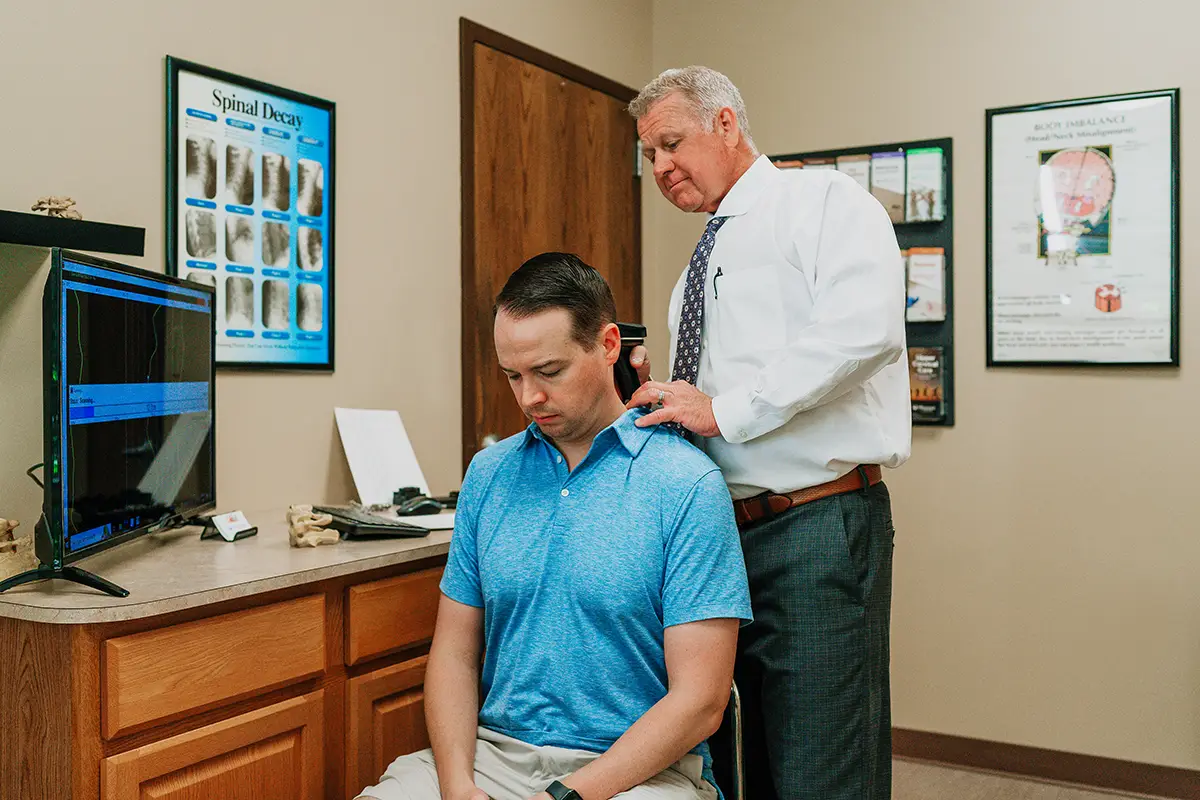
This is where the Upper Cervical Spine Center becomes a vital resource. They specialize in detecting and correcting misalignments in the upper neck that cause compensatory pain elsewhere in the body. If your "foundation" (the lower back) is hurting, it might be because the "roof" (the upper neck) is crooked.
Practitioners at the Upper Cervical Spine Center use precise imaging and gentle corrections to realign the head and neck. Once the head is straight, the rest of the spine can untwist, relieving the chronic pressure on the lower back. For desk workers who have tried everything else without relief, investigating this top-down connection can be the missing link to recovery.

Conclusion: Prioritizing Prevention for a Pain-Free Work Life
Lower spine pain does not have to be the price of doing business. It is a signal from your body that the current mechanical load is too high and the maintenance is too low. By re-engineering your workstation, committing to regular movement, strengthening your body’s internal support system, and ensuring your spine is aligned from top to bottom, you can work pain-free.
Remember that consistency is key. Doing a 20-minute core workout once a month won't help, but engaging your core and stretching for five minutes every day will. Adjusting your monitor height takes thirty seconds but saves your spine from thousands of hours of strain.
Your career is a marathon, not a sprint. Treat your body with the respect it deserves, and it will support you through every project, deadline, and success that lies ahead.
Upper Cervical Spine Center
https://maps.app.goo.gl/7z8cKyohFGmgGe1F8
2550 W Arrowood Rd #104, Charlotte, NC 28273
(704) 588-5560
https://www.uppercervicalspinecenter.com/
Address
2550 W Arrowood Rd
Suite 104
Charlotte, North Carolina, 28273
United States
Hours
Monday-Friday:
9AM-12PM
&
2PM-6PM
We Align the Head and Neck So That the Nerves Can Send Brain Healing Messages to Affected Parts Of Your Body.
It's a Natural Self Healing.
