
Your Guide to Lasting Migraine Relief in Charlotte, NC

If you're caught in the cycle of migraine pain and medication, you know how frustrating it can be. It feels like you're just putting a band-aid on the symptoms, waiting for the next attack to strike. Many of our neighbors here in Charlotte are looking for a better way—a way to find real relief from chronic neck pain, headaches, and sciatica without relying on a cabinet full of pills.
The good news is, it's possible. For many of our patients in Charlotte, NC, finding lasting, drug-free relief starts with getting to the root of the problem. It's about understanding your unique triggers, making smart changes to your lifestyle, and exploring physical solutions that help your body heal itself. As a trusted chiropractor near you, our goal is to guide you on that journey.
A Drug-Free Path to Migraine Relief in Charlotte
Living with migraines in Charlotte means you know the drill: days lost to throbbing pain, sensitivity to light, and that wave of nausea that just won't quit. While medication might offer a temporary escape, it often comes with side effects and doesn't prevent the next migraine from coming. But what if you could change the pattern?
We wrote this guide specifically for our community here in Charlotte, NC, to show you a different path. It's about taking back control from conditions like back pain, neck pain, and chronic headaches.
Instead of just reacting to the pain when it hits, you can build a life that's more resilient to migraines. Migraines aren't just random acts of bad luck; they’re often the body's response to specific triggers and underlying imbalances, many of which can be addressed with targeted chiropractic care.
How Our Charlotte Chiropractor Can Help
From my experience, many chronic migraine cases have a structural component that gets completely overlooked. The problem often starts in the upper neck, right where the head and spine connect. A tiny misalignment in this critical area—often addressed by an upper cervical chiropractor—can irritate sensitive nerves and affect blood flow to the brain, setting the stage for a migraine.
In this guide, we’ll walk you through:
- Actionable Strategies: We'll get into the nitty-gritty of identifying your personal triggers—everything from diet and stress to those seasonal changes we get here in North Carolina.
- Lifestyle Adjustments: You'll learn how specific tweaks to your sleep, nutrition, and stress-management routines can make a huge difference in how often and how intensely your migraines hit.
- A Foundational Chiropractic Solution: I'll also introduce you to a specialized, gentle physical approach that focuses on correcting the alignment of the upper cervical spine. For many, this is the missing piece of the puzzle.
Over the last 30 years, our clinic has helped more than 10,000 patients right here in the Charlotte area find a way out of the migraine cycle. Our approach is simple: we make gentle, precise corrections that restore the body's natural ability to function and heal—no medication needed.
Think of this guide as your roadmap. It’s time to stop chasing symptoms and start addressing the real cause of your pain. A life with fewer migraines and more freedom is within your reach.
Identifying Your Personal Migraine Triggers

If you want to get a handle on your migraines, the first step is to become a bit of a detective. Migraines rarely just happen out of the blue. More often than not, they’re the result of a specific trigger—or a combination of them—that pushes your body past its breaking point.
When most people think of triggers, they immediately jump to things like red wine or aged cheese. While diet is absolutely a piece of the puzzle, the real picture is much, much bigger. Triggers can be subtle, and they can stack up over hours or even days before an attack finally hits.
This is exactly why keeping a detailed migraine diary is one of the most powerful things you can do. It's not about being restrictive; it's about gathering intelligence to spot patterns that are often hiding in plain sight. Think of it as creating a personalized roadmap for relief.
What to Expect and What to Track in a Migraine Diary
A truly effective diary goes way beyond just what you eat. To get to the root cause, you need to log a variety of daily factors to connect the dots between your life and your head pain. This is a common first step recommended by chiropractors for patients dealing with chronic headaches and migraines in Charlotte.
You can use a simple notebook or a dedicated app on your phone—what matters most is consistency. Every day, try to jot down notes on the following:
- Headache Specifics: When did it start and stop? Rate the pain from 1-10. What did it feel like—throbbing, stabbing, pressure? Note any other symptoms like nausea, aura, or light sensitivity.
- Food and Drink: List everything you consume and what time you consumed it. Be specific! Don't forget to include snacks, sauces, and even chewing gum, as they can contain hidden triggers like MSG or artificial sweeteners.
- Sleep Patterns: Log your bedtime and wake-up time. Crucially, note the quality of your sleep. Was it deep and restful, or were you tossing and turning? Both too much and too little sleep can be a trigger.
To make this process a little easier, we've put together a table outlining the most common trigger categories and how to think about tracking them.
Common Migraine Triggers and How to Track Them
Keeping a consistent log like this for just a few weeks can be incredibly revealing. You might discover connections you never would have imagined.
Looking Beyond the Obvious Culprits
While the basics are a great starting point, the missing link for many people often lies in the less-obvious influences. This is where you can truly learn how to manage migraines without medication—by getting ahead of your personal triggers.
Consider adding these frequently overlooked factors to your diary:
- Stress Levels: It's not always the stressful event itself, but the relaxation afterward. That Saturday morning migraine after a brutal work week is a classic example. Rate your stress on a 1-10 scale daily.
- Weather Changes: Here in North Carolina, we get our fair share of dramatic weather shifts. Pay attention to changes in barometric pressure, sudden temperature drops, or high humidity.
- Hormonal Cycles: For women, tracking your cycle is non-negotiable. Fluctuating estrogen is one of the most powerful migraine triggers there is.
Using a food diary app can simplify the dietary tracking component, making it easier to spot patterns. After a few weeks of consistent logging, you’ll likely start to see your personal triggers emerge, giving you the power to make targeted changes and reclaim your days.
Building a Migraine-Resistant Lifestyle
Once you start connecting the dots with your personal triggers, the real work begins: building a lifestyle that makes you inherently more resilient to migraine attacks. This isn't about creating a perfect, trigger-free bubble. It's about building a stable foundation so that when life happens—a stressful day, a missed meal—your body is less likely to sound the migraine alarm.
Over the years, many of our patients here in Charlotte have discovered that the most profound changes come from small, consistent habits. It's the daily choices in diet, sleep, and stress management that really move the needle, calming the nervous system and raising the threshold for what it takes to trigger an attack.
How Chiropractic Care Improves Overall Health
Food is either medicine or it's not, and for a migraine-prone brain, this couldn't be more true. What you eat has a direct line to inflammation and neurological stability. While there's no magic "migraine diet" for everyone, the core idea is simple: eat whole, anti-inflammatory foods.
What does that look like in practice?
- Omega-3 Fatty Acids: Think fatty fish like salmon or mackerel. These healthy fats are fantastic for taming body-wide inflammation.
- Leafy Greens: Spinach and kale are loaded with magnesium, a mineral that's absolutely vital for a calm nervous system. We know that low magnesium levels are a common theme for people with migraines.
- Ginger: This humble root is a powerhouse with natural anti-inflammatory effects that can actually help soothe migraine symptoms. I often suggest adding fresh ginger to tea or meals for a consistent, gentle effect.
Just as important is what you avoid. Highly processed foods, artificial sweeteners like aspartame, and additives like MSG can act like excitotoxins, basically putting your nerve cells on high alert. The goal is to give your body clean, stable fuel.
The Power of Consistent Sleep and Hydration
Your brain is a creature of habit. Nothing supports it better than a rock-solid sleep schedule. This means going to bed and waking up around the same time every single day—and yes, that includes weekends. That rhythm is incredibly grounding for a brain that’s easily thrown off balance.
Aim for 7-9 hours of quality sleep each night. It's no surprise that poor or erratic sleep is one of the most powerful and frequently reported migraine triggers.
Hydration is right up there with sleep. When you're dehydrated, your blood volume can decrease, which can irritate sensitive nerves in the brain. Keep a water bottle handy and sip throughout the day. It's far more effective than chugging a bunch of water all at once. For many people, simply being more mindful of water intake makes a huge difference.
Lifestyle habits are a powerful piece of the puzzle, but they're most effective when they're not fighting against an underlying structural problem. For many, the real game-changer is addressing issues in the neck and spine.
For instance, the clinical evidence is hard to ignore: chiropractic spinal manipulation therapy (SMT) has been shown to slash cervicogenic headache days and cut migraine frequency by 50% over three months. This often works as well as, or even better than, medication, but without the side effects.
One study in The Spine Journal followed 256 adults with headaches stemming from neck issues. They found that 18 SMT sessions cut headache days in half, far outperforming the light massage control group. Other research has backed this up, showing regular upper cervical adjustments reduced migraine frequency by 50% compared to medication alone, with people also reporting shorter and less severe attacks. You can explore these studies for yourself on the National Library of Medicine.
Managing Stress with Simple Techniques
Chronic stress puts your nervous system on a constant, simmering high alert—a perfect storm for migraines. The good news is you don't need a silent retreat or an hour of meditation to see benefits. Small, practical techniques can make a world of difference.
A simple one to try is "box breathing." Just inhale for a count of four, hold your breath for four, exhale for four, and hold again for four. Doing this for just a couple of minutes can effectively hit the reset button on your body's stress response. For a deeper dive into practical strategies, check out our guide on migraine treatment at home.
Mindfulness is another powerful tool. It’s simply about paying attention to the present moment. You can practice it anywhere—feel the warm water on your hands as you do dishes, or notice the sensation of your feet on the floor as you walk to your car. Some people also find that supportive tools like calming crystals for anxiety can help them anchor into a more balanced emotional state. By weaving these small habits into your day, you’re actively training your brain to be less reactive and building a more resilient you.
Exploring Physical Solutions for Migraine Relief
For many people here in Charlotte, building a migraine-resistant lifestyle is a huge step forward. But sometimes, even with the best diet and sleep habits, the attacks just keep coming.
When that happens, it’s often a sign that the root of the problem isn't just about lifestyle—it's structural. Your body is an intricate system, and when something is physically out of alignment, it can create a ripple effect of dysfunction that lifestyle changes alone can't fix.
How Our Neck Pain Chiropractor in Charlotte Can Help
When we look at treating migraines without medication, it’s really helpful to consider therapies that directly address the body’s nervous system and physical structure. Many of our patients have found success with approaches that calm the nervous system and release built-up tension.
A few common physical solutions include:
- Acupuncture: This ancient practice uses thin needles at specific points to help rebalance the body's energy and trigger the release of natural, pain-relieving endorphins.
- Massage Therapy: A good therapist can target and release chronic tension in the neck, shoulders, and upper back—areas that often contribute to headache patterns when they're tight.
- Biofeedback: This technique is pretty fascinating. It uses sensors to let you "see" your body's functions like muscle tension, helping you learn to consciously control them to head off stress before a migraine can start.
While these can be effective for managing symptoms, they often don’t correct the foundational issue. From what I’ve seen over the years, a significant number of migraine sufferers share a common, often-overlooked problem: a misalignment in the upper cervical spine.
The Critical Connection: Your Upper Neck and Migraines
Think about the very top of your neck, where your head connects to your spine. This area, made up of two highly specialized vertebrae called the C1 (Atlas) and C2 (Axis), is one of the most complex and delicate parts of your body. It has a unique range of motion and is surrounded by a dense web of nerves and blood vessels that travel directly to and from your brain.
You can picture this spot as the main junction box for your body's communication and plumbing systems. Everything has to pass through this narrow corridor.
Now, imagine what happens if a small misalignment occurs right there. A vertebra that's just slightly out of place can put pressure on the brainstem and irritate surrounding nerves. It can also disrupt the normal flow of blood and cerebrospinal fluid, both of which are absolutely vital for a healthy brain. This structural problem creates a state of constant stress on your central nervous system—the perfect storm for a migraine.
For many people, the idea that a subtle neck problem can cause such debilitating head pain is a revelation. The thing is, this misalignment doesn't have to come from a major car accident. It can develop slowly over time from years of poor posture or even minor bumps and falls we’ve long forgotten.
How a Tiny Misalignment Creates a Major Problem
The link between the upper neck and migraines isn't just a theory; it's grounded in straightforward physiology. When the atlas or axis is out of its proper position, it can lead to a cascade of issues:
- Brainstem Irritation: The brainstem, which controls countless vital functions, passes directly through the atlas. Even slight pressure here can disrupt nerve signals, contributing to pain, nausea, and light sensitivity.
- Restricted Blood Flow: Key arteries supplying blood to the brain thread through these upper vertebrae. A misalignment can compromise that flow, a well-known factor in certain types of migraines.
- Nerve Interference: Nerves exiting the upper spine can get pinched or irritated, firing off pain signals that your brain interprets as a headache or full-blown migraine.
This is a harsh reality for millions, but groundbreaking research shows that upper cervical chiropractic care offers a powerful, drug-free path forward by targeting these specific misalignments. A landmark randomized clinical trial from 1998 compared chiropractic adjustments to the drug amitriptyline over an 8-week period. While both groups improved during treatment, the chiropractic care group was 57% more effective at reducing headache frequency during the follow-up period. You can learn more about the efficacy of chiropractic treatment for migraines in that study.
This is exactly why our work at The Upper Cervical Spine Center is so focused. We don't perform general spinal manipulation. We use precise diagnostics to identify and gently correct these foundational misalignments, allowing the body to restore normal function and, ultimately, to heal itself.
How Upper Cervical Chiropractic Care Gets to the Root of the Problem
While many physical therapies can provide some temporary relief, they often act as a band-aid, easing symptoms without addressing what’s actually causing the migraines. At The Upper Cervical Spine Center, our clinic in Charlotte, NC, we go deeper. Our work is centered on a foundational structural issue that can trigger and perpetuate chronic migraines—a problem located in a very specific, and often overlooked, area: the upper cervical spine.
This isn't about general spinal manipulation or the kind of neck "cracking" you might imagine. Our approach is incredibly gentle, precise, and based on a sophisticated understanding of how your nervous system is put together. Led by Dr. Ray Drury, our Charlotte-based team has dedicated over 30 years to perfecting this method, bringing lasting relief to more than 10,000 patients, many of whom came to us feeling like they had already tried everything.
Precision Diagnostics to Pinpoint the Exact Issue
We never guess. Before we even think about making a correction, we need to know exactly what's going on. We use advanced diagnostic imaging to create a three-dimensional picture of your top two vertebrae, the atlas (C1) and axis (C2). This technology lets us measure the precise angle and degree of any misalignment, right down to a fraction of a degree.
This detailed analysis is the key to everything. It doesn't just tell us if there's a misalignment; it shows us the exact direction and magnitude of the shift. This information becomes the blueprint for your care, ensuring every correction is as specific and gentle as it can possibly be.
The Gentle Correction That Lets Your Body Heal
Once we have your exact measurements, the correction itself is surprisingly subtle. You won’t experience any twisting, popping, or cracking. Instead, we apply a controlled, light touch to nudge the misaligned vertebra back into its natural position. This precision allows your body's own muscles and ligaments to take over and hold the correction in place.
The goal is simple: restore the natural alignment between your head and neck. But the impact is profound, rippling through your entire nervous system. By taking pressure off the brainstem and the surrounding nerves, we help restore the vital communication pathways between your brain and your body.
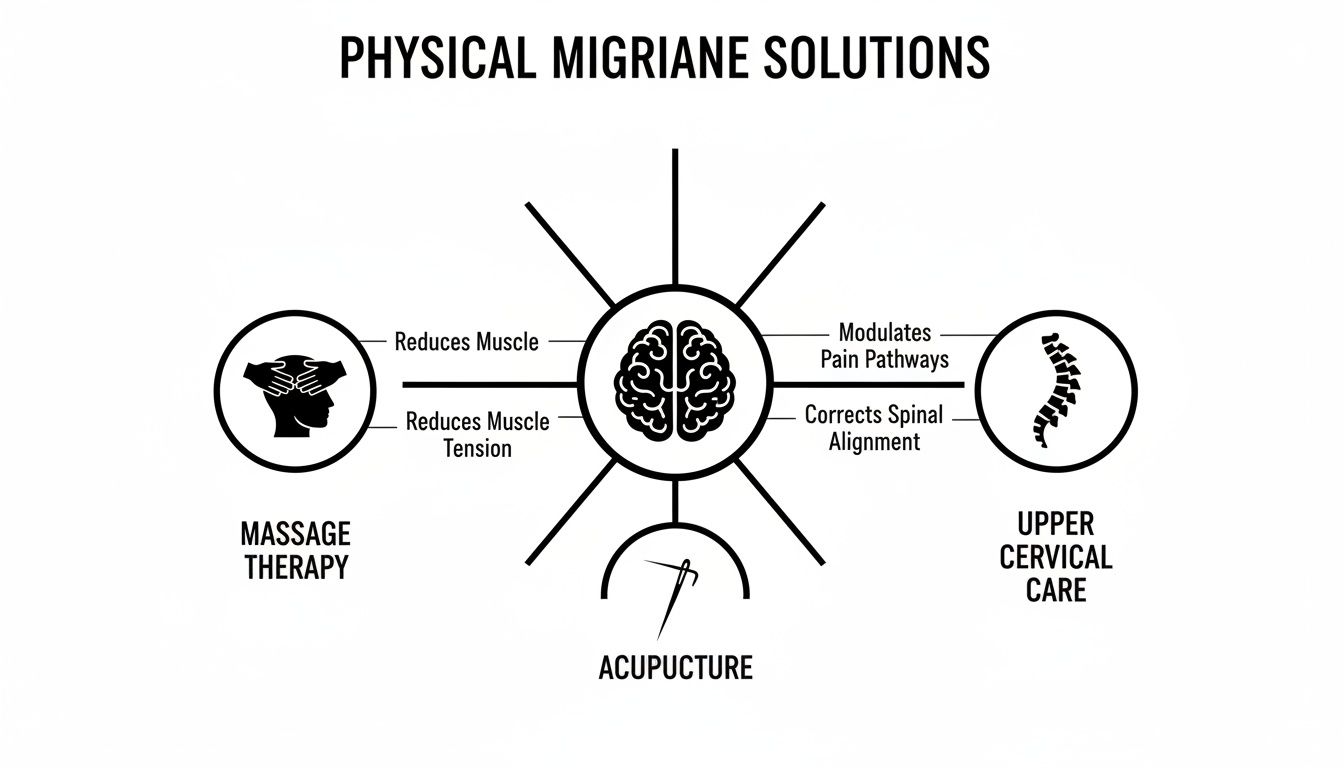
As you can see, while different physical approaches have their place, upper cervical care is unique because it focuses on the foundational spinal alignment that directly influences the central nervous system.
Why Does Correcting Spinal Alignment Actually Work?
So, how does this one gentle correction translate into fewer migraines? It all comes back to a few key physiological principles. When the upper cervical spine is properly aligned, amazing things can happen:
- Reduced Brainstem Irritation: The brainstem is like the body's main control panel. A misaligned atlas can put direct pressure on this vital structure, disrupting nerve signals and contributing to classic migraine symptoms like head pain, nausea, and light sensitivity.
- Improved Blood Flow: Key arteries supplying blood to your brain—the vertebral arteries—pass directly through the atlas. Correcting a misalignment can help normalize blood flow, a critical factor in preventing certain types of migraines.
- Enhanced Cerebrospinal Fluid (CSF) Circulation: Think of CSF as the brain's cleaning system. A structural shift can create a bottleneck, impeding this flow and leading to a buildup of pressure and metabolic waste that can easily trigger headaches.
By addressing these root causes, we're not just chasing symptoms. We're giving the body a chance to regulate itself properly, which naturally reduces the frequency and intensity of migraine attacks. You can learn more about the science behind this approach and how it works on our site.
The proof is in the results. In one rigorous six-month study, after just two months of specific chiropractic adjustments, 22% of migraine patients saw their attacks drop by over 90%. Nearly 50% of all participants reported a significant drop in how severe their episodes were. These weren't small changes; the group receiving adjustments saw statistically significant improvements across the board—in frequency, duration, disability, and even medication use.
What to Expect When Visiting Our Charlotte Chiropractic Clinic
For new patients joining us from Charlotte, Wilmington, or Nashville, the journey starts with a simple conversation. We begin with a complimentary clarity call to go over your health history and see if our care is the right fit for you. If it is, your initial examination will include our detailed diagnostic imaging.
We believe you should be an active partner in your own health. We take the time to sit down with you, show you your images, and explain exactly what we’ve found. From there, we’ll outline a clear, personalized plan to get you back on track.
Schedule an Appointment With Our Chiropractor in Charlotte, NC
If you've made it this far, you know that managing migraines without medication isn't just a fantasy—it's an achievable reality. We've walked through the practical steps you can take, from playing detective to uncover your personal triggers to building a lifestyle that fosters a calm, resilient nervous system. Most importantly, we’ve uncovered how physical, structural issues in the upper neck can be the missing piece of the puzzle for so many people.
The biggest shift in thinking is moving away from just chasing symptoms. True, lasting relief comes from addressing the root causes that allow migraines to take hold in the first place.
That’s what we do. At The Upper Cervical Spine Center, our entire focus is on finding and addressing those foundational causes so you can get back to your life.
Your First Conversation is Simple and On Us
We get it. Exploring a new approach can feel daunting, especially when you've already tried so much. That’s why we make it incredibly easy for our neighbors in Charlotte, Wilmington, and Nashville to get answers without any pressure.
Here’s what you can expect when you connect with our team:
- We Listen, First and Foremost: We want to hear your story. What have you been through? What have you tried? How are migraines really affecting you?
- Straightforward Answers: No confusing jargon. Our goal is to give you clarity and help you understand the "why" behind our approach and how it helps people with migraines.
- A True Partnership: This is a team effort. You are the expert on your body, and we bring the specialized expertise to help guide your healing.
Why a Specialized Focus Matters
General wellness tips are a great start, but if a specific structural issue is driving your migraines, you need a specific solution. When the top bones of the neck are even slightly misaligned, they can disrupt nerve function and blood flow—essentially keeping your nervous system in a constant state of high alert.
Our gentle, precise corrections aim to restore that critical alignment, relieving pressure on the sensitive nerves and structures at the base of the skull. This isn't about a temporary patch; it's about helping your body function the way it was designed to.
For thousands of our patients in the Charlotte, NC area and beyond, this targeted approach has been the key that finally unlocked lasting relief.
It's Time to Reclaim Your Life
You don't have to live in fear of the next attack. You don’t have to schedule your life around your migraines or feel stuck in a cycle of medications that only seem to dull the pain temporarily. A future with more clear-headed, pain-free days is absolutely possible.
For those in the Charlotte, Wilmington, and Nashville areas, taking that first step is completely risk-free. You have a few easy options:
- Book a Complimentary Clarity Call: This is a simple phone call with one of our doctors to talk about your situation and see if our care is a good fit.
- Schedule an Initial Exam: Ready to dig in and find the source of the problem? Book a comprehensive evaluation in one of our offices.
- Grab Dr. Drury's Free E-Book: Get a deeper understanding of the science by downloading a free copy of The Best Kept Secret in Health Care.
Don't let another day go by. Your journey toward a life with fewer—or even zero—migraines can start right now.
At The Upper Cervical Spine Center, we are dedicated to helping you find lasting, drug-free relief from migraines. Learn more and schedule your complimentary consultation today.
Address
2550 W Arrowood Rd
Suite 104
Charlotte, North Carolina, 28273
United States
Hours
Monday-Friday:
9AM-12PM
&
2PM-6PM
We Align the Head and Neck So That the Nerves Can Send Brain Healing Messages to Affected Parts Of Your Body.
It's a Natural Self Healing.
